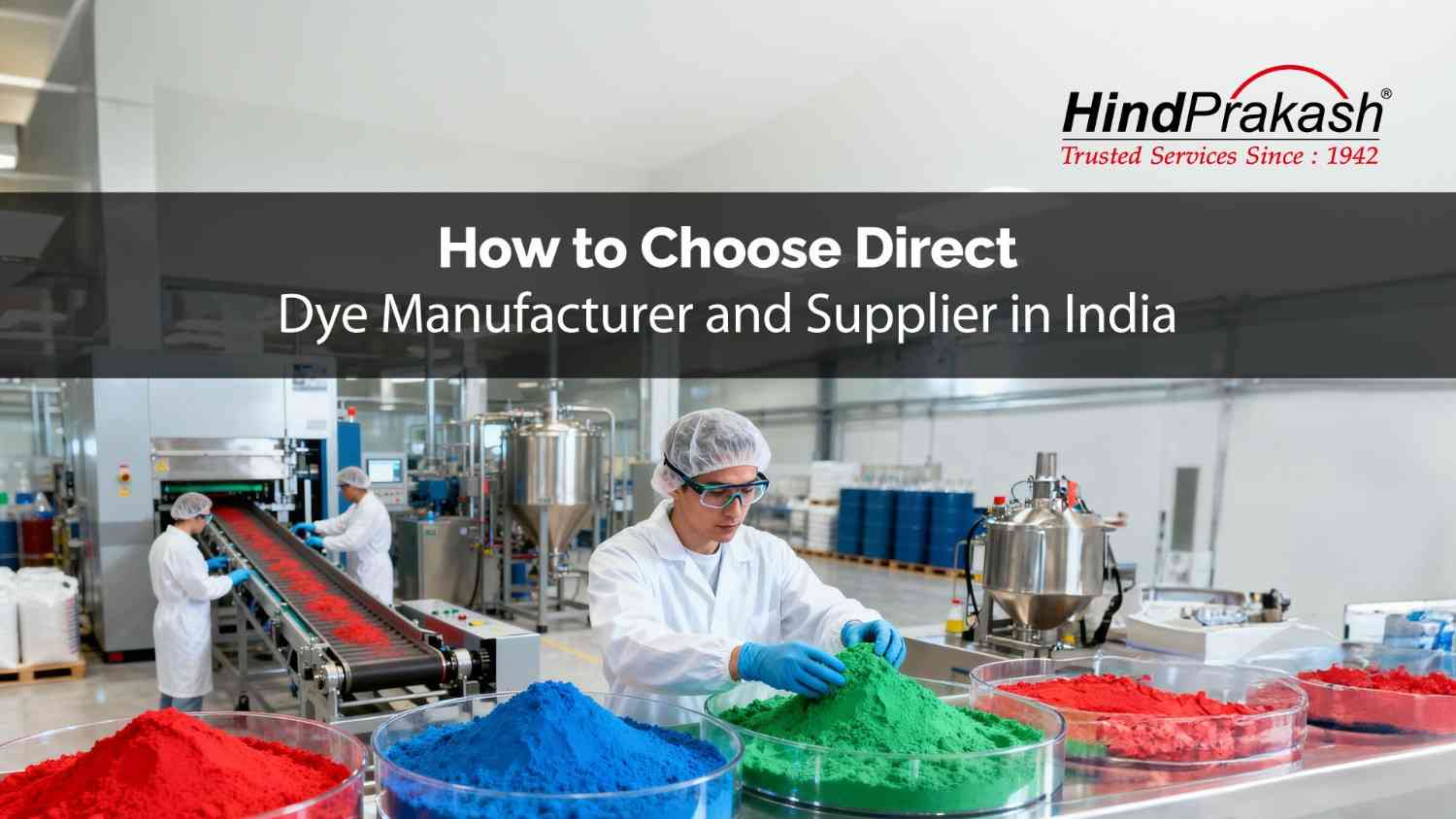
How to Choose a Direct Dye Manufacturer and Supplier in India
Every production batch needs to deliver the same colour performance. For manufacturers, this becomes much easier when they work with a reliable Direct Dye Manufacturer and Supplier in India that follows consistent quality standards and understands their production requirements. Inconsistent dye quality or limited technical support can lead to shade variations, reprocessing, production delays, and higher costs.
This is especially important for large-scale textile production, where consistent shades and a reliable supply of dyes are essential. Choosing an experienced manufacturer can help reduce these challenges and give buyers greater confidence in the quality and consistency of their dyes.
This guide explains the key factors buyers should evaluate before selecting a direct dye supplier India and how to identify a partner capable of supporting long-term manufacturing needs.
Understanding Direct Dyes and Their Industrial Role
Direct dyes for textile applications are water-soluble colourants designed primarily for cellulosic fibres. They are valued for their straightforward application process, broad colour range, and cost-effective dyeing performance.
Among their most common applications are direct dyes for cotton, where manufacturers seek uniform shade development and dependable batch-to-batch consistency. These dyes are also used across other cellulose-based substrates depending on the required end-use and processing conditions.
For industrial buyers, selecting the right supplier is just as important as selecting the right dye.
What to Look for in a Direct Dye Manufacturer
Manufacturing Expertise and Product Consistency:
An experienced manufacturer follows controlled production processes to maintain consistent colour strength, purity, and reproducibility.
Before finalising a supplier, assess:
- Manufacturing experience
- Quality control systems
- Batch consistency records
- Production capacity
- Technical documentation
Reliable manufacturers minimise shade variation between production lots, helping textile processors maintain consistent product quality.
Comprehensive Product Portfolio:
Different textile applications require different dye characteristics.
A dependable supplier should offer industrial direct dyes suitable for:
- Cotton fabrics
- Home textiles
- Garments
- Yarn dyeing
- Industrial textile processing
A wider product range allows buyers to source multiple shades and dye requirements from a single supplier.
Technical Support Beyond Product Supply:
Industrial dye selection often requires application expertise.
Choose a supplier that provides:
- Shade selection guidance
- Dyeing process recommendations
- Troubleshooting assistance
- Technical documentation
- Product application support
This collaborative approach helps improve production efficiency while reducing trial-and-error during manufacturing.
Evaluate Quality Standards Before Purchasing:
Not all dyes available in the market deliver consistent industrial performance.
When planning to buy direct dyes India, verify whether the supplier maintains:
- Stringent raw material selection
- In-house quality testing
- Batch traceability
- Consistent colour strength
- Stable supply capabilities
These factors contribute to predictable production outcomes and reduced operational disruptions.
Consider Supply Reliability and Export Capability:
Manufacturers serving both domestic and international customers typically maintain stronger production planning and quality systems.
A recognised direct dye exporter generally demonstrates:
- Consistent manufacturing capability
- International supply experience
- Reliable logistics management
- Documentation support
- Timely deliveries
For businesses operating multiple production facilities or serving global markets, dependable supply continuity is an important selection criterion.
Why Location Can Be an Advantage
Choosing a direct dye manufacturer Ahmedabad offers several operational benefits.
Ahmedabad has developed into one of India's leading chemical and textile manufacturing hubs, providing:
- Strong industrial infrastructure
- Efficient logistics
- Skilled technical workforce
- Well-established chemical supply ecosystem
- Faster domestic distribution
These advantages often translate into shorter lead times and better customer support.
Why HindPrakash Is a Reliable Manufacturing Partner
With decades of experience in colour and chemical manufacturing, HindPrakash supports textile manufacturers with dependable direct dye solutions designed for industrial applications.
Key strengths include:
- Broad portfolio of direct dyes
- Consistent manufacturing quality
- Technical application expertise
- Stringent quality control practices
- Reliable domestic and export supply capabilities
- Customer-focused technical support
Whether customers require standard shades or application-specific guidance, HindPrakash works closely with manufacturers to deliver dependable colour performance and supply consistency.
Conclusion
Choosing the right direct dye manufacturer India requires evaluating far more than pricing alone. Manufacturing expertise, quality assurance, technical support, production capability, and reliable supply all contribute to successful textile processing.
If your organisation is looking for a trusted direct dye supplier India with proven manufacturing capabilities, HindPrakash combines technical knowledge, quality-focused production, and responsive customer support to help manufacturers achieve consistent dyeing results across industrial applications.
FAQs
Q1. What are direct dyes used for?
A: Direct dyes are primarily used for colouring cellulose-based materials, particularly cotton. They are widely applied in textile manufacturing because of their ease of application and broad shade range.
Q2. How do I choose the right direct dye manufacturer in India?
A: Evaluate manufacturing experience, quality control systems, technical support, production capacity, product consistency, and supply reliability before selecting a supplier.
Q3. What industries use direct dyes the most in India?
A: The textile industry is the largest consumer of direct dyes, including manufacturers of garments, fabrics, home textiles, yarns, and other cotton-based products.
Q4. Can direct dyes be customized for specific shades?
A: Yes, experienced manufacturers can often develop customised shades or recommend suitable dye combinations based on customer processing requirements and colour specifications.
Q5. How does colour fastness vary across direct dyes?
A: Colour fastness depends on the dye chemistry, substrate, processing conditions, and after-treatment methods. Selecting the appropriate dye grade helps achieve the required performance.
Q6. Where can I buy direct dyes in bulk in India?
A: Industrial buyers should source dyes directly from established manufacturers or authorised suppliers that provide consistent product quality, technical support, and dependable bulk supply capabilities.